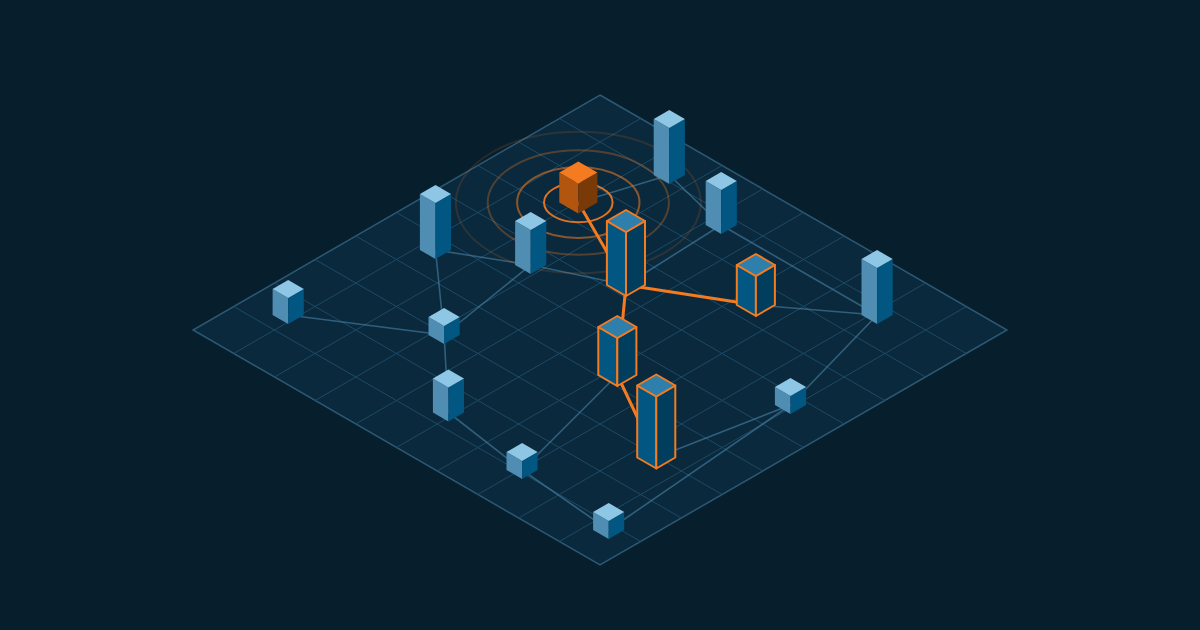
This whitepaper examines how Intelligent Decision Support Systems (IDSS) help healthcare and aged care leaders make connected decisions about workforce, capacity, service continuity and cost. It follows a question that appears in different forms across the sector: what care can we safely deliver with the people and resources available, and what should we change when those conditions move?
The morning report says there is capacity. Can you use it?
A healthcare executive sees available beds in a report. A residential aged care leader sees vacancies across several facilities. Neither number, on its own, establishes what the organization can deliver.
In a hospital, a room may still be awaiting cleaning, required equipment may be unavailable, or the next shift may lack the necessary skills. In residential aged care, an available room may require a staffing arrangement suited to a new resident's assessed needs. In either setting, the number on the report describes only part of the decision.
These are illustrative situations, but the management problem is familiar. Workforce, care delivery, facilities and finance each hold information needed by the others. Teams spend time assembling that context through calls, spreadsheets and meetings while operating conditions continue to change.
The consequences extend beyond reporting efficiency. An incomplete view can contribute to avoidable delays, repeated escalation, additional workforce costs and commitments that are difficult to fulfill. It can also obscure where pressure is being absorbed by staff.
Usable capacity is a relationship between care needs, qualified people, ready resources and time. Managing those relationships is an operational leadership responsibility. IDSS makes the information behind that responsibility easier to examine and act on.
What a connected decision needs to contain
An IDSS combines relevant records with a model of how the organization operates. It helps teams investigate a situation, identify dependencies, compare responses and retain the basis for an authorized decision.
This goes beyond bringing several dashboards onto one screen. A useful system must connect the underlying facts. A roster entry should relate to a person's availability and verified credentials. A room should relate to its readiness conditions. A capacity estimate should show the assumptions and unresolved dependencies behind it.
The model also needs to represent uncertainty. A planned discharge is different from a confirmed discharge. A staff member who may accept a shift is different from one who has accepted it. A missing readiness record is different from a completed check that identified a problem.
For management, a decision-ready view answers five questions:
- What is known, and how current is the information?
- What conditions must be satisfied before we act?
- Which options are feasible under the agreed constraints?
- What consequences and uncertainties accompany each option?
- Who must review, approve and carry out the response?
An operational IDSS supports the people responsible for these decisions. Clinical assessment, diagnosis, treatment, admission suitability and individual care planning remain with appropriately qualified professionals and established governance processes.
Two operating settings, one coordination problem
Hospitals and aged care providers share some management challenges, but their care models, workforce arrangements and obligations differ. A useful IDSS respects those differences instead of applying one generic set of rules across both.
In a hospital: the bottleneck may be outside the ward
Consider a hospital preparing for the next day's planned activity while managing uncertain demand. The operations team needs to understand staffing, equipment, room readiness and expected patient movements together.
An IDSS can connect the agreed activity plan to workforce availability, facility status and supporting services. It can surface an unresolved dependency, such as equipment scheduled for maintenance during a period when it is expected to be needed. The relevant teams can then compare rescheduling the maintenance, securing an alternative asset or adjusting the operational plan.
The value lies in making the consequences visible across departments. Moving one activity may release a resource while creating pressure elsewhere. Any change affecting care requires the appropriate clinical and operational review.
In residential aged care: coverage is more than a head count
Consider a provider reviewing the coming week's rosters across several facilities. Absences, changes in assessed resident needs and workforce availability may alter the suitability of an earlier plan.
An IDSS can connect those changes to staff skills, verified credentials, working arrangements, facility requirements and recorded costs. Managers can compare available responses while seeing whether a change transfers a coverage problem to another location or shift.
An apparent staffing surplus at one facility does not automatically mean people can be moved. Travel, continuity of care, staff preferences, employment conditions and the needs of both facilities may matter. The model makes those conditions explicit so that authorized managers can evaluate a practical response.
In both examples, the system helps people investigate and coordinate. It does not establish that a care arrangement is appropriate merely because a numerical target is met.
The leadership meeting becomes a choice between responses
Disconnected reporting often leaves a meeting focused on agreeing which numbers are current. Connected decision support lets more of that time go toward evaluating what to do.
Suppose a service anticipates a staffing gap during a period of increased demand. Managers might consider internal coverage, additional external staff or changes to planned activity where professionally appropriate. The cheapest option may be unsuitable, and a solution for one shift may create a problem the following day.
Scenario planning lets teams examine alternatives without changing the live operational plan. Each scenario should retain its assumptions, constraints, unresolved items and approval requirements.
| Response under review | What management needs to examine | What still needs confirmation |
|---|---|---|
| Reallocate available internal staff | Skills, coverage at both locations, workload and continuity | Availability, local suitability and authorized approvals |
| Engage external staff | Required credentials, onboarding, availability and cost | Provider confirmation and readiness to work in the setting |
| Adjust planned activity | Operational dependencies, resource effects and downstream commitments | Clinical appropriateness, affected teams and required communications |
| Change the timing of supporting work | Equipment or room availability and the effect on later tasks | Facilities, service and operational approval |
These are illustrative responses, not recommendations for a particular situation. The feasible options depend on the service, current information and professional assessment.
A useful scenario result shows why an option is considered feasible and what could invalidate it. It should also distinguish a recorded fact, a forecast and a management assumption. A polished forecast must not conceal uncertainty.
Learning requires the view you had at the time
After a difficult week, leaders need to understand why additional costs arose or planned capacity could not be used. Today's records may no longer show the conditions under which earlier decisions were made.
Temporality preserves how information and plans changed over time. With appropriate source history and retention arrangements, an IDSS can help reconstruct the operational picture available at an earlier point and compare it with what followed.
This creates a stronger basis for questions such as:
- When did a workforce gap first become visible, and when was it addressed?
- Which readiness dependencies repeatedly delayed the use of available capacity?
- How often did expected demand differ from actual demand?
- Did a response reduce pressure overall or move it to another service?
- Which assumptions should change in the next planning cycle?
Historical analysis can reveal recurring patterns and support investigation. A relationship in the data does not, by itself, prove a cause. Changes in demand, case mix, staffing, processes and recording practices may all affect the interpretation.
The objective is organizational learning: improving the next decision while retaining the evidence and context behind the last one.
Under the surface: a model of your operation
JanusKS builds an IDSS around the customer's services, terminology, responsibilities and decision requirements. The software foundation is available today; the operational model and integrations are developed for the organization.
An ontology defines the relevant entities, relationships and rules. These might include services, locations, staff, qualifications, shifts, equipment, readiness checks and approval responsibilities. Customer specialists establish what these terms mean and which conditions apply. There is no assumption that every provider begins with the same ready-made industry model.
A knowledge graph connects the actual records using that structure. It allows a manager to follow a dependency from planned activity to the resources it requires and the source evidence supporting their availability. See what an ontology is and how a knowledge graph works.
Data ingestion brings relevant information into this model through agreed integrations, APIs, document and spreadsheet imports, and operational feeds. MCP can also provide a controlled interface through which authorized tools and agents retrieve or submit information. What is available depends on the connected systems and their permitted capabilities.
Integration must address identifiers, duplicate records, differing definitions, refresh intervals and source ownership. The system should make stale, conflicting or unavailable information visible. More connections are useful only when their information can be interpreted reliably.
AI agents can then assist with finding records, investigating exceptions, preparing summaries and comparing permitted scenarios. Access through MCP and governed agents must respect the user's permissions and the agreed boundaries on actions. Generated suggestions remain subject to validation and review.
Trust is part of the operating model
Healthcare and aged care information requires careful handling. An operational question does not automatically justify access to an entire clinical record. A facilities team may need to know that a room is unavailable without seeing a person's diagnosis. Finance may need aggregated cost information rather than identifiable care details.
The design should therefore start with the minimum information needed for each decision. Access controls, purpose limitations, retention, audit records and escalation responsibilities belong in the implementation from the outset.
Each customer's JanusKS IDSS runs in an isolated environment, with deployment arrangements agreed around security and data sovereignty. Private infrastructure and local or air-gapped AI are options where required. These arrangements need to cover the whole workflow, including integrations, support access, backups and logs.
AI conversations also need deliberate handling. Prompts and responses can contain sensitive information even when the underlying databases are well protected. Organizations should define what conversation content is retained, who can access it and how long it is kept. Auditability does not require keeping every sensitive detail indefinitely.
Applicable staffing, reporting and care requirements must be established with the customer's qualified personnel and maintained as requirements change. Configured checks and evidence links can support oversight, but a system-generated status is not a certification of compliance or a substitute for professional review.
Security and governance also includes testing the response to incomplete records, inappropriate access requests, incorrect recommendations and unavailable integrations. The organization needs a clear way to continue operating when the system cannot provide a dependable answer.
What would justify the investment?
The business case should connect better information to a decision the organization makes repeatedly. A useful initial scope might be near-term workforce coverage, room and equipment readiness, or coordinating capacity across facilities.
Before implementation, agree how performance will be assessed. Measures can include:
- Time spent assembling information for operational reviews.
- Lead time between identifying a resource gap and the affected activity.
- Time taken to investigate and resolve readiness exceptions.
- Additional staffing costs, considered alongside workload and service quality.
- The proportion of recommendations requiring correction or further investigation.
- Missed issues, false alerts and the effort needed to maintain reliable data.
Faster decisions are valuable only when they are dependable. Evaluation should include clinical, operational, workforce, privacy and technology representatives as appropriate to the scope. Compare outputs with the existing process before relying on them more broadly.
JanusKS brings experience building connected operational software through Projectal in media and entertainment. That demonstrates the underlying foundation in production use. Healthcare and aged care implementations require their own models, integrations, governance and validation; the examples in this paper are illustrative applications, not claims of completed healthcare deployments.
The investment becomes credible when a defined workflow shows measurable improvement without adding unacceptable risk or administrative burden. Expansion should follow that evidence.
Bring one difficult operational decision
Healthcare and aged care leaders need to coordinate care commitments, workforce capacity, resources and financial sustainability under changing conditions. IDSS provides a practical foundation for examining those relationships and making informed decisions with a clear record of the evidence used.
Bring a decision that currently requires repeated calls, manual reconciliation or uncertain assumptions. Contact JanusKS to discuss building a customer-specific knowledge graph and Intelligent Decision Support System for your healthcare or aged care organization. We will work with your team to define the decision, connect the relevant information and establish how success will be measured.