Intelligent Decision Support Systems (IDSS) are available today, giving building and construction businesses a connected basis for managing delivery, commercial exposure and client commitments. By bringing project information, dependencies and decision workflows together, IDSS provides a stronger operating model for a modern construction business. This whitepaper explains that model through a practical example: completion readiness.
Executive summary
A project can appear close to completion while outstanding inspections, certificates, design changes or commissioning records still threaten handover. The information needed to identify those issues may already exist, but it is distributed across project platforms, schedules, document registers, commercial systems and correspondence.
For executives, this fragmentation has commercial consequences. Delayed decisions can affect the timing of revenue, financing exposure, contractor commitments, client confidence and the availability of people for the next project.
An Intelligent Decision Support System connects relevant information around a model of how the business operates. It helps teams identify gaps, follow dependencies, compare options and retain the evidence behind decisions. AI can assist with reviewing records and investigating issues, while professional judgment and authorized approvals remain central.
JanusKS delivers an enterprise IDSS platform that brings together the knowledge model, integration, decision-support applications, deployment controls and ongoing service arrangements. Implementation connects these capabilities to the customer's projects, systems and operational requirements, beginning with a defined business decision and measurable value.
The executive challenge: information without a connected view
Developers, contractors, owners and delivery partners operate through interconnected commitments. A design change can affect procurement. A delayed delivery can change access arrangements, crew bookings and commissioning sequences. An incomplete evidence package can hold up a milestone even when physical work appears finished.
Different systems capture different parts of that picture. Project platforms hold drawings, requests for information and quality records. Scheduling systems hold activities and milestones. Commercial systems hold costs, contracts and variations. Important context also sits in emails and the experience of individual team members.
These systems serve valuable purposes. The challenge arises when a decision crosses their boundaries.
A senior leader should be able to ask:
- Are we genuinely ready for the next milestone, and what evidence supports that view?
- Which outstanding items could affect handover, payment or the release of resources?
- Who owns the next action, and what other activities depend on it?
- What has changed since the last review?
- Which response offers the most appropriate balance of time, cost and delivery risk?
Answering these questions should require less manual reconstruction and leave more time for judgment and action.
A practical starting point: completion readiness
Consider an illustrative residential development approaching completion. The project director wants to review outstanding compliance, certification and handover matters before the final delivery period.
In an Australian example, this might include preparing for an Occupation Certificate process in New South Wales. Practical Completion, permission to occupy, contractual handover and buyer settlement are distinct milestones; their requirements and relationships depend on the jurisdiction, contract and project arrangements.
The director's concern is commercial as well as operational. Financing exposure may be substantial, settlements may depend on specified milestones, and the contractor may face delay-related obligations under its contract.
Much of the relevant information may already be held in a platform such as Procore, supported by commissioning records, consultant reports, schedules and commercial registers. The director still needs to find the records, confirm their scope and revision, cross-reference requirements and identify unresolved dependencies.
The useful question is specific:
“Review the available records against our agreed completion requirements. Show the supporting evidence, outstanding matters, responsible parties and potential effects on the milestone.”
An IDSS supports this review through a connected requirements and evidence model, configured around the project's agreed completion criteria.
| Review area | What the system brings together | What management needs to assess |
|---|---|---|
| Evidence coverage | Applicable requirements and the documents or records linked to each | Which items have evidence, which need review and which have no evidence located? |
| Quality and commissioning | Relevant inspection outcomes, commissioning records and unresolved actions | Which dependencies remain open before the next milestone? |
| Document consistency | Revisions, dates, locations and the scope covered by each record | Is the evidence applicable to the work being assessed, or is it outdated, conflicting or incomplete? |
| Accountability | Action owners, due dates and recorded follow-up | Who must act, and when is escalation needed? |
| Commercial dependencies | Milestone dates and the relevant contractual or financial assumptions | What exposure should commercial and finance teams review if an item remains unresolved? |
These are illustrative categories. The review scope and requirements are established with the customer's qualified project, commercial and compliance personnel.
The resulting readiness register presents priorities, links to evidence, clear status definitions and a recorded review history. It distinguishes evidence located, awaiting professional review, evidence not located and conflicting information. A missing record does not automatically prove non-compliance, and locating a document does not establish that its contents are sufficient.
The system supports preparation and management review. Certification, contractual determinations and statutory decisions remain with the appropriately authorized parties.
From a one-off review to continuous readiness
The same model supports monitoring throughout delivery. As a design revision, inspection outcome or commissioning record is received, the relevant readiness view is refreshed according to the configured integration and review process.
A newly identified issue can then be considered against its connected work package, location, responsible party and milestone. Instead of rediscovering the situation at each executive meeting, the team can review what changed and where intervention is needed.
What makes this an Intelligent Decision Support System?
An IDSS combines connected business information with the tools needed to investigate a situation and assess possible responses.
For construction, the components work together:
| Component | Its role in the business |
|---|---|
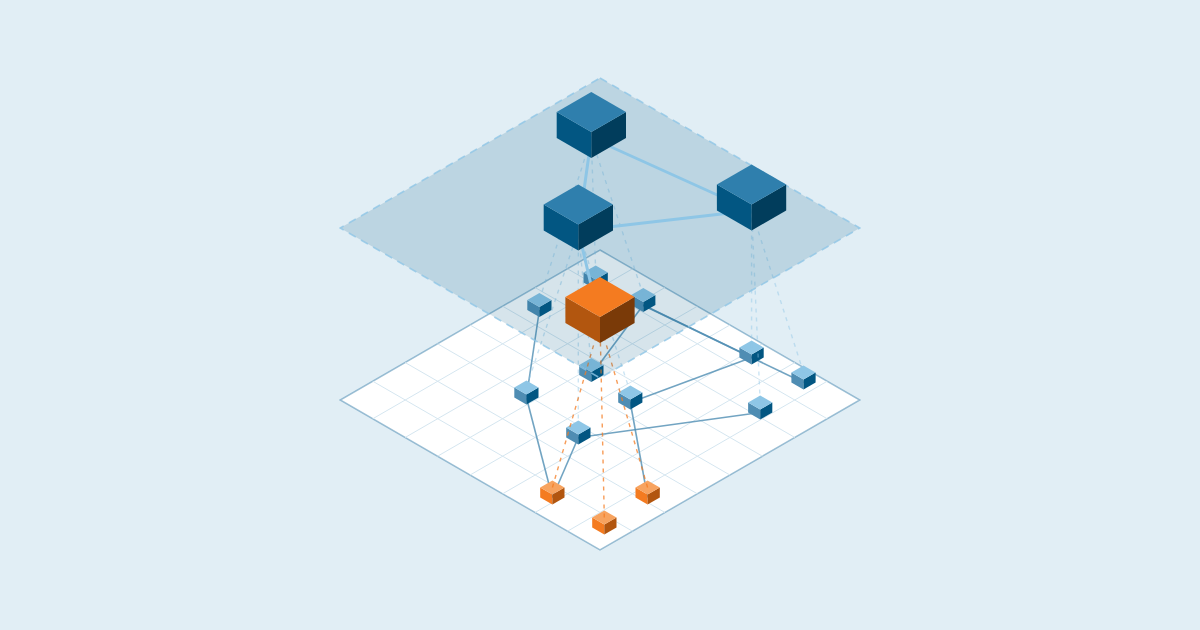
| Industry-specific ontology | Defines concepts such as work packages, assets, locations, inspections, requirements and milestones, including their relationships and shared meaning. |
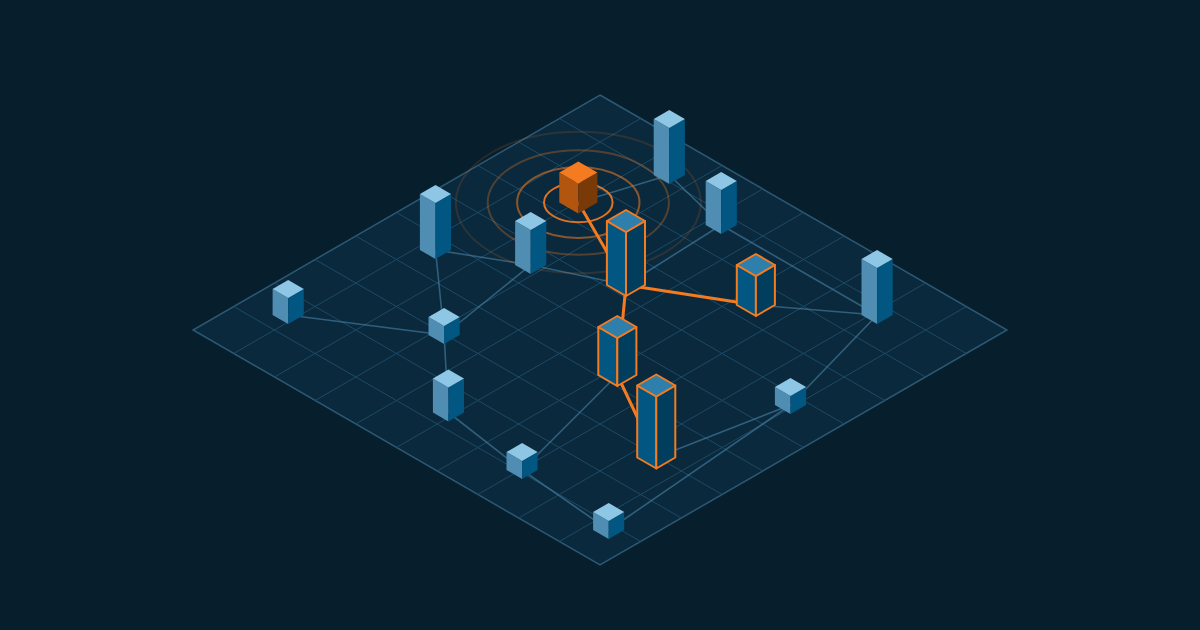
| Knowledge graph | Connects the actual project records so teams can follow dependencies across systems and disciplines. |
| Data ingestion and integration | Brings relevant records into the model through supported APIs, files, databases, events and authorized agent workflows. |
| Temporality | Preserves retained historical states so teams can examine what changed, compare earlier plans with outcomes and learn across projects. |
| Analysis, scenarios and AI assistance | Helps review evidence, investigate issues and compare options against configured assumptions and constraints. |
| Governance and workflow | Applies permissions, review stages, approval rules and audit records to support accountable action. |
An AI assistant may provide an accessible way to ask questions. The wider capability depends on the connected information, defined requirements and governed processes behind the answer.
Building on existing technology investments
The starting point is the customer's existing systems, processes and people. An IDSS connects the information needed for an agreed decision and returns useful outputs to the workflows where action occurs.
A project platform can remain the system of record for quality documents. A scheduling application can remain responsible for the master program. Finance can continue to administer commercial records in its established environment.
JanusKS scopes the supported interfaces, access rights, mapping, synchronization frequency and any writeback behavior for the intended workflow. Read-only analysis can be a suitable initial scope; changes to live systems require separately agreed permissions and approval rules.
This extends the value of existing investments and reduces the effort required to use them together.
A controlled enterprise environment
Construction information includes commercially sensitive contracts, subcontractor rates, personal information, designs and client records. Security and operating responsibility must be part of the solution design from the outset.
JanusKS supports deployment approaches that can include managed hosting, private cloud, on-premises and disconnected environments, subject to the agreed product and service scope. The appropriate choice depends on the customer's operating model, data requirements and support arrangements.
The deployment and service scope establishes:
- Where information is stored, processed and backed up, including support access.
- Who can see project, personal and commercial information, including external delivery partners.
- Which integrations and AI providers may receive information.
- How authentication, credentials, access reviews and relevant audit records are managed.
- How backups, recovery, monitoring, incidents, maintenance and support responsibilities are allocated.
- Which actions require review and approval before they affect live operations.
The JanusKS commitment not to use Customer Data to train third-party public AI models is part of this approach. Customer-enabled external services still require assessment of their own processing arrangements.
These are concrete design and contractual decisions. They should be documented for the deployment rather than left as general assurances about AI.
The value extends beyond project efficiency
More focused executive attention
A director's time is better spent assessing exposure, resolving priorities and engaging delivery partners than searching for records across systems. Evidence-linked exception views focus management attention on matters requiring judgment.
Better commercial visibility
Connecting milestones, open actions and commercial assumptions helps teams review the potential effects of delay earlier. Finance and commercial leaders can test assumptions and coordinate responses using the same underlying context.
Better service and stronger client relationships
A connected history of commitments, client requests, issues, decisions and resolutions supports more consistent service. Teams can explain the current position, follow through on previous commitments and recognize recurring problems.
That continuity matters during handover and aftercare, as well as when working with repeat clients. Consistent follow-through and clearer communication strengthen the basis for client confidence and repeat business. Client feedback and retention measures help track the commercial impact.
More productive and supported people
Reducing repeated searches and administrative reconciliation gives experienced staff more time to apply their expertise. Clear responsibilities and accessible context can also make onboarding and project transitions easier. Staff feedback and retention measures help assess how these improvements affect the experience of working in the business.
Knowledge that remains with the business
Retained project history helps future teams understand decisions and outcomes when personnel change. Comparing planned and actual durations, recurring defects, closeout issues and supplier performance can inform future bids and delivery plans.
Implementing IDSS in your business
The most credible starting point is a bounded operational problem with an executive sponsor, accessible evidence and a way to measure improvement.
Completion readiness is one option. Others include design-change impact, procurement readiness, commissioning coordination or handover and aftercare management.
A practical implementation follows a staged approach:
- Define the decision and its value. Agree the users, project scope, management questions and baseline measures. Identify the decisions the system will support and the approvals it will not replace.
- Assess information and requirements. Review sources, data quality, access rights and integration feasibility. Have qualified personnel confirm the applicable requirements and status definitions.
- Agree the model and operating environment. Define the ontology, evidence links, responsibilities, security controls and deployment arrangements.
- Pilot alongside the existing process. Compare system outputs with professional review. Test missed issues, incorrect flags, evidence relevance and the effort required to resolve exceptions.
- Onboard and operate. Train users, assign ownership, agree support and change-management arrangements, and confirm acceptance criteria before broader reliance.
- Extend where results justify it. Add projects, data sources or decision workflows while reviewing performance and maintaining the model.
Useful measures include the time required to prepare a readiness review, the proportion of requirements with traceable evidence, the lead time between identifying an issue and the affected milestone, and the time taken to resolve actions. Output quality matters too: false alerts, missed issues and outdated evidence need explicit review.
Commercial outcomes, such as earlier cash realization or fewer handover disputes, require longer observation and careful attribution. They should form part of the business case without being presented as guaranteed returns.
Why JanusKS?
JanusKS develops Intelligent Decision Support Systems built around enterprise ontologies, knowledge graphs, temporality and connected operational workflows.
Through Projectal, this foundation is already applied to the planning and management challenges of media and entertainment businesses. It provides established experience connecting people, projects, resources and financial information across complex delivery environments.
For building and construction, JanusKS configures the platform around the industry's terminology, responsibilities, contractual structures and operational constraints, with requirements validated by the customer's industry practitioners. Projectal demonstrates the foundation in operational use; construction implementations apply that foundation to their own requirements, integrations and acceptance criteria.
JanusKS brings the platform, integration, application design and agreed deployment and support arrangements together around that business need. The implementation work focuses on connecting the customer's information, configuring the model and workflows, and establishing effective use across the organization.
Start with a decision that matters
A modern construction business needs a connected view of delivery, cash flow, client commitments and operational risk. IDSS brings relevant evidence and dependencies into the management decisions that shape those outcomes.
Completion readiness is one practical application. The wider value is an operating model in which teams share context, executives see what needs attention and the business learns from its history. IDSS makes that approach available today.
Contact JanusKS to put Intelligent Decision Support to work in your construction business. Bring a completion, delivery or commercial decision that currently requires too much manual investigation. We will work with your team to define the initial scope, connect the relevant information and establish the measures of success.